
blog
How Suppliers Power the Future of Transparent Giving
Why product suppliers and brands are partnering with transparent giving platforms — and how to become a Givelink supplier in 2026.

Panos Kokmotos |
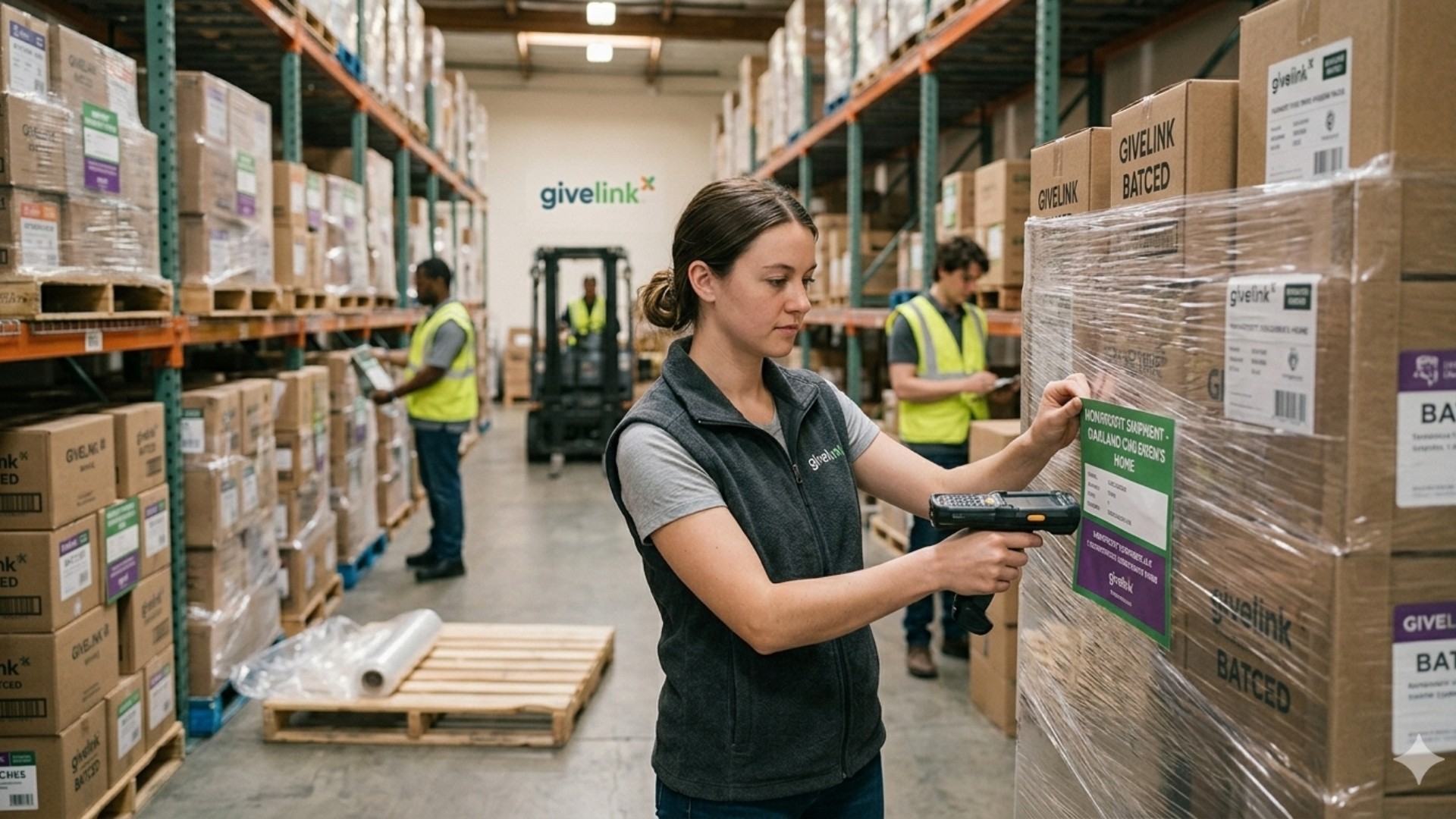
How Suppliers Power the Future of Transparent Giving
Why product suppliers and brands are partnering with transparent giving platforms — and how to become a Givelink supplier in 2026.
A supplier partnership with a transparent giving platform is one of the most underleveraged growth channels in 2026 — combining ESG impact, B2B reach, and product distribution into a single relationship. Givelink, a Transparent Giving Platform that connects donors to verified U.S. 501(c)(3) nonprofits with photo proof of delivery, sources every product through verified U.S. suppliers. With 100+ verified nonprofits onboarded and 100,000+ items already delivered, supplier partnerships are how the platform scales — and how brands plug verifiable impact directly into their distribution. This is what supplier partnerships look like, why they work, and how to become one.
Key Takeaways
- Suppliers are how Givelink scales. Every product sent to a nonprofit comes from a verified U.S. supplier.
- The model is transitioning — long-term, suppliers fund the platform so donors pay exact retail.
- Brands gain ESG-grade impact with photo-documented delivery as proof.
- No bidding wars. Suppliers partner on stable margins, not race-to-the-bottom contracts.
- Becoming a supplier opens a new B2B channel directly into 100+ verified nonprofits.
Why supplier partnerships matter in 2026
ESG isn't a checkbox anymore. Donors, employees, customers, and investors are all asking the same question companies once dodged: where's the proof?
A 2025 Blackbaud analysis found that "exceptional gifts" and verifiable impact are the top drivers of growth for nonprofits in the U.S. and many regions globally. The lesson maps directly onto corporate giving and ESG reporting: vague impact claims aren't enough. Photo-documented, item-level outcomes are the new standard.
That's the gap supplier partnerships fill. When a supplier ships hygiene products to a verified nonprofit through a transparent giving platform, three things happen:
- The product reaches a real organization with verified 501(c)(3) status (and Charity Navigator evaluation data on the profile).
- The receiving nonprofit photographs the delivery and uploads it to the donor and supplier dashboards.
- The supplier gets a photographic, traceable record of where their product went and who it served.
This is ESG reporting that doesn't require a 90-page PDF. It requires a photo and a date.
How the Givelink supplier model works
Givelink's supplier model is built on three principles: stability, transparency, and shared mission.
| What suppliers provide | What suppliers get |
|---|---|
| Verified U.S. inventory of products nonprofits need | Predictable B2B order flow, batched biweekly |
| Preferred pricing or small platform margins | Photo-documented impact tied to every shipment |
| Reliable fulfillment | Direct distribution into 100+ verified nonprofits |
| ESG-grade transparency | Co-branded impact stories (with approval) |
Donors pay product cost on the platform. The supplier-side margin (currently averaging around 5% in the U.S.) helps cover sourcing, logistics, and delivery coordination — and is part of a transitional model. The long-term goal is a fully supplier-funded platform where donors pay exact retail price and suppliers offer commissions in exchange for distribution, exactly as already happens in other regions.
"Giving is not a payment flow problem. It's a visibility problem."
For suppliers, this reframe is the opportunity. The visibility infrastructure is already built. Plugging product into it is what makes the model scale.
What suppliers gain — beyond CSR
Three benefits keep coming up in supplier conversations.
1. Verifiable impact for ESG reports. A photo of your product being received by a Charity Navigator–verified nonprofit is more rigorous than most CSR documentation. It's also auditable.
2. New B2B distribution. Givelink represents a curated, growing customer base — 100+ verified nonprofits with documented purchasing patterns and stable demand cycles. For consumer brands, this is incremental volume with built-in narrative value.
3. Co-branded storytelling. Subject to nonprofit approval, suppliers can be tagged in delivery stories, dashboard updates, and impact reports. Real photos of real outcomes — the kind of content marketing teams pay agencies to fabricate.
Why this matters in 2026
The macro picture for ESG and corporate giving is sharp. Donor-advised funds (DAFs) are surging — Fidelity Charitable's 2025 report showed DAF grants up 25% year-over-year. Foundation leaders are reporting unprecedented demand: the Center for Effective Philanthropy found 87% of foundation leaders saw increased demand for grant funding in 2025. And donors at every level — individual, corporate, philanthropic — are demanding verifiable, photographable outcomes.
Suppliers who plug into transparent giving infrastructure now will be the default ESG partners of the next decade. Those who wait will end up commodity vendors competing on price.
The strategic question isn't "should we donate product?" It's "should our donations be visible?"
Givelink in action
A U.S. household-goods supplier partnered with Givelink to ship hygiene products through verified nonprofits' wishlists. Each batched biweekly delivery is photographed by the receiving nonprofit. The supplier's ESG team now has a quarterly impact report built entirely from real photos, real nonprofits, and real Charity Navigator–verified outcomes — not estimates. Get in touch with Givelink to explore a supplier partnership.
Frequently Asked Questions
How do I become a Givelink supplier?
Reach out to contact@givelink.app with your company, product categories, U.S. distribution capabilities, and any ESG goals you're trying to support. The Givelink team will review fit, walk you through the partnership model, and outline next steps.
What kind of products are needed?
Anything verified nonprofits actually need — hygiene goods, food and pantry items, school and educational supplies, baby and infant care, medical and senior care, household basics. The catalog is built around real nonprofit wishlists, not generic donation categories.
What's the supplier-side cost structure?
The current model includes a small platform margin (averaging around 5% in the U.S.) on each product to cover sourcing, logistics, and delivery coordination. The long-term goal is a fully supplier-funded model where suppliers offer commissions and donors pay exact retail.
Do suppliers get visibility on where products go?
Yes. Each delivery is photographed by the receiving nonprofit and uploaded to the dashboard, including verified nonprofit identity and Charity Navigator data. Supplier ESG teams can pull this into reports.
Is there exclusivity?
No. Givelink works with multiple suppliers per product category to ensure stable inventory and fast fulfillment. Suppliers can also expand the scope of their partnership over time as nonprofit demand grows.
Become a supplier with verifiable impact
If your company is shipping product into ESG reports that no one independently verifies, there's a better way. Contact Givelink to explore a supplier partnership where every shipment becomes a photo-documented outcome at a Charity Navigator–verified nonprofit.
Stay Human.
Panos Kokmotos is Co-Founder and COO of Givelink. He leads the platform's U.S. expansion and supplier partnerships from San Francisco.
Διάβασε επίσης
Τι είναι η Givelink;
Άκου από τους ίδιους τους ιδρυτές:
Στήριξε μια οργάνωση
Κάνε τα ψώνια που χρειάζεται, online!