
blog
How Animal Rescues Can Beat Amazon and Chewy Wishlists in 2026
Animal welfare nonprofits run on donated supplies. Here's why Amazon and Chewy wishlists leave rescues with no donor data and no proof — and what works better.

Antonis Politis |
How Animal Rescues Can Beat Amazon and Chewy Wishlists in 2026
Animal welfare nonprofits run on donated supplies. Here's why Amazon and Chewy wishlists leave rescues with no donor data and no proof — and what works better.
Animal rescues, shelters, and TNR (Trap-Neuter-Return) programs run almost entirely on donated supplies: food, litter, medical supplies, crates, blankets, and trapping equipment. For most of these organizations, the in-kind donation pipeline is the lifeline. And for years, the default tools have been Amazon Wishlists and Chewy Wish Lists — free, familiar, and easy to share. But animal welfare nonprofits keep running into the same wall: the goods arrive, and then nothing else does. No donor name. No way to thank the person who fed their cats this week. No photo to show the donor where their gift went. Givelink, a Transparent Giving Platform that connects donors to verified U.S. 501(c)(3) nonprofits with photo proof of delivery, was built to close exactly this gap. Here's why animal rescues deserve better than a retail wishlist.
Key Takeaways
- Amazon and Chewy wishlists give animal rescues no donor data — every supply donation is anonymous.
- No photo proof means donors never see the animals their gift helped — and don't give again.
- Volunteer-run rescues are hit hardest by the manual tax-receipt and tracking burden.
- Givelink provides donor data, photo-confirmed delivery, and tax receipts — free for rescues.
- Donors who see photo proof give again at nearly 3× the sector average rate (Givelink data, 2026).
Why animal rescues depend on in-kind giving more than most nonprofits
Animal welfare organizations have a unique cost structure. Veterinary care, food, litter, and supplies are continuous, high-volume, and predictable — a cat colony doesn't stop needing food because the donation cycle slowed down. Most rescues are volunteer-run with little to no paid staff, which means every administrative hour spent reconciling anonymous Amazon orders is an hour not spent on animals.
In-kind giving is how the community feeds the animals directly. A donor who buys a case of cat food on a wishlist is, in the most literal sense, feeding specific cats that week. That's a powerful, tangible act — and the tools most rescues use waste its potential.
Where Amazon and Chewy wishlists fall short for rescues
No donor data. Chewy Wish Lists and Amazon Wishlists ship the supplies to the rescue but don't share the donor's name or email. A volunteer can't send a thank-you, can't build a relationship, can't turn a one-time supply donor into a monthly supporter.
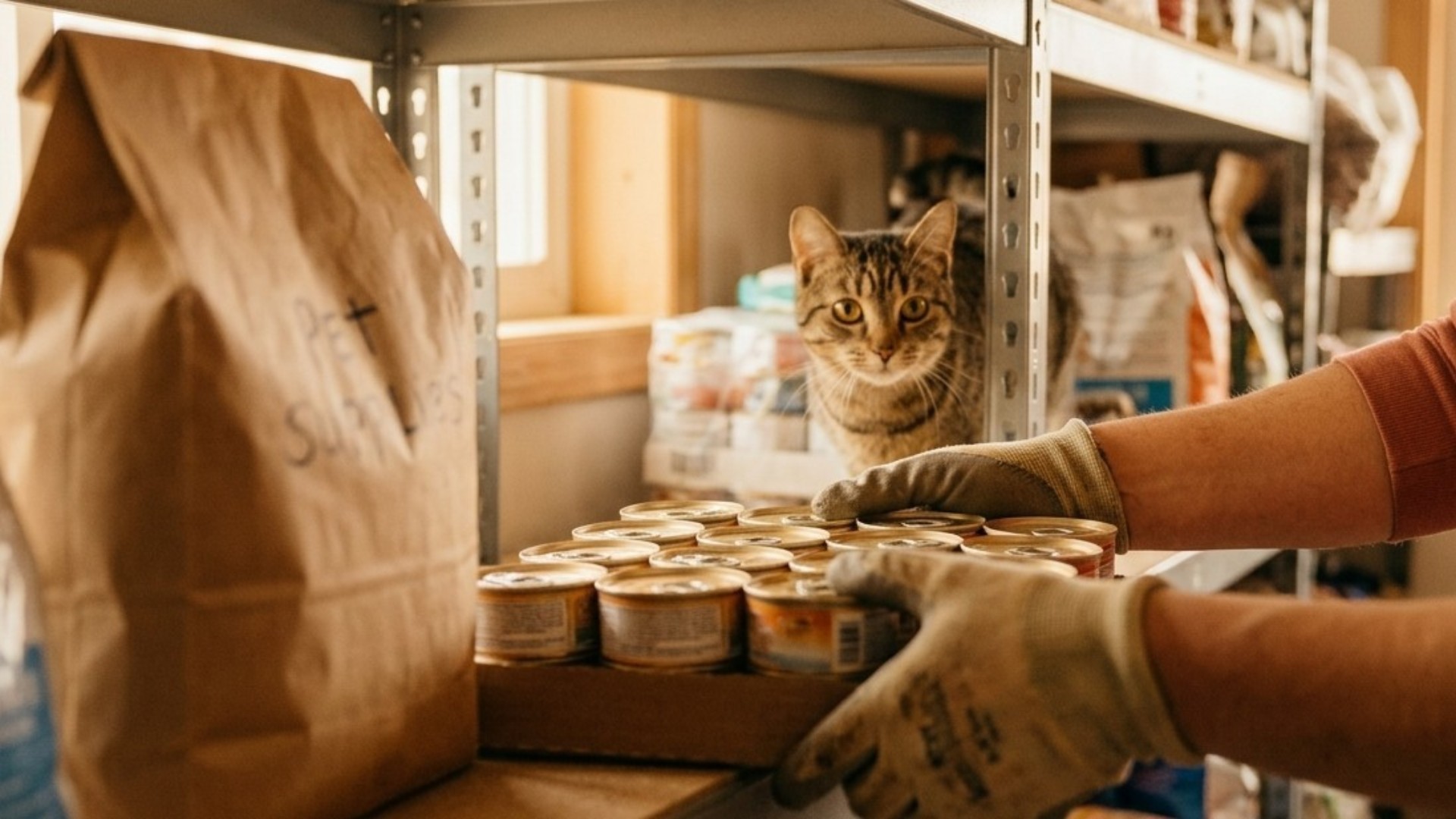
No photo proof. The donor never sees the cats, dogs, or animals their gift helped. For animal lovers — who are among the most emotionally motivated donors in the entire nonprofit sector — this is a massive missed connection. A photo of a fed colony or a recovering animal is the single most powerful retention tool a rescue has, and the wishlist model throws it away.
Manual tax receipts. Volunteer-run rescues have to manually track and acknowledge every in-kind gift for tax purposes — a burden that compounds during high-intake seasons like kitten season.
Price volatility and substitutions. Chewy and Amazon prices fluctuate, and substitutions can mean a rescue receives a different food than the one a colony's animals are adjusted to — a real welfare issue, not just an inconvenience.
"Giving was always supposed to be a thread between two lives."
For an animal rescue, that thread runs from a donor to a specific animal. The photo is what makes it visible.
What Givelink does differently for animal welfare
| Feature | Amazon / Chewy Wishlist | Givelink |
|---|---|---|
| Donor name & email | No | Yes |
| Photo proof (the animals) | No | Yes |
| Automatic tax receipt | No | Yes |
| Price stability | Variable | Fixed at checkout |
| Charity Navigator verification | No | Yes |
| Branded giving button | No | Yes |
| Cost to rescue | Free | Free forever |
When a donor gives cat food, litter, or medical supplies through Givelink, the rescue's volunteers photograph the delivery — ideally with the animals it's helping — and the donor receives that photo. For animal lovers, that photo is the reason they give again, and again, and bring their friends.
What animal rescues need most on Givelink
| Category | Items | Used For |
|---|---|---|
| Food | Wet/dry cat & dog food, kitten formula | Daily feeding, colonies, fosters |
| Litter & cleaning | Cat litter, puppy pads, disinfectant | Shelter and foster sanitation |
| Medical | Flea treatment, wound care, syringes | Recovery and colony health |
| TNR supplies | Humane traps, trap covers, carriers | Trap-Neuter-Return operations |
| Comfort | Blankets, beds, towels, crates | Foster and shelter housing |
Why this matters in 2026
Animal shelter intake has risen across California as economic pressure forces more families to surrender pets, and veterinary cost inflation has strained rescue budgets to the breaking point. Volunteer-run rescues need every advantage — including the donor relationships and retention that Amazon and Chewy wishlists structurally prevent. The rescues that build named, photo-confirmed donor relationships now will be the ones still operating in three years.
Frequently Asked Questions
What do animal rescues need most from donors?
The most consistent needs are food (wet and dry, plus kitten formula), litter and cleaning supplies, basic medical supplies, TNR trapping equipment, and comfort items like blankets and crates. Specific, current needs are best given through a live wishlist.
Do animal shelters get donor information from Amazon or Chewy wishlists?
No. Both Amazon and Chewy ship the supplies to the shelter but don't share the donor's name or email unless the donor self-identifies. This makes building donor relationships nearly impossible.
What is the best alternative to a Chewy wishlist for animal rescues?
Givelink gives animal rescues donor data, photo-confirmed delivery (ideally showing the animals helped), automatic tax receipts, and Charity Navigator verification — all free for rescues.
Is Givelink free for animal welfare nonprofits?
Yes. Givelink is free for all nonprofits, including animal rescues, with no fees, contracts, or minimums.
Show your donors the animals they helped
Set up your free Givelink nonprofit profile and turn every supply donation into a photo-confirmed connection between a donor and an animal.
Stay Human.
Antonis Politis is CEO and Co-Founder of Givelink.
Διάβασε επίσης
Τι είναι η Givelink;
Άκου από τους ίδιους τους ιδρυτές:
Στήριξε μια οργάνωση
Κάνε τα ψώνια που χρειάζεται, online!